| Brand Name: | JHDA |
| Model Number: | JH-1218, JH-1219 |
| MOQ: | 1MT |
| Payment Terms: | LC/TT |
| Supply Ability: | 6000MT/month |
The primary ingredients of this product include synthetic wax, natural wax, and a cationic polymer. These components are combined through a specialized polymerization process to create an effective sizing agent for pulp.
When applied, this product significantly enhances the sizing level and softness of the paper. It imparts a gentle and natural sheen, giving the paper a smooth and moist tactile feel.
Moreover, the water resistance of the treated paper is noticeably improved, contributing to its durability and quality.
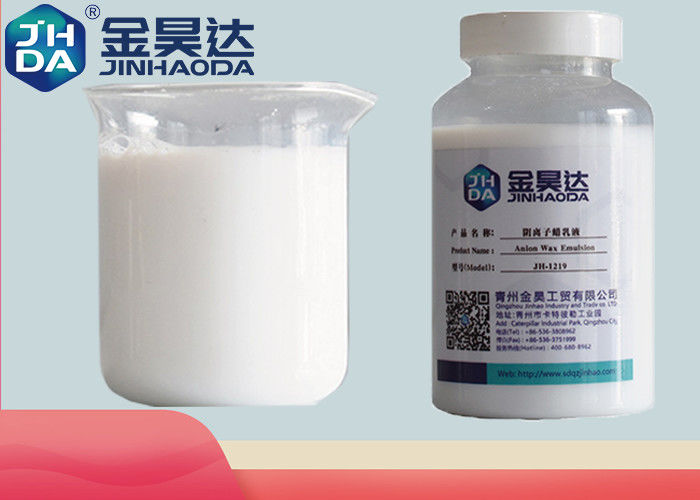
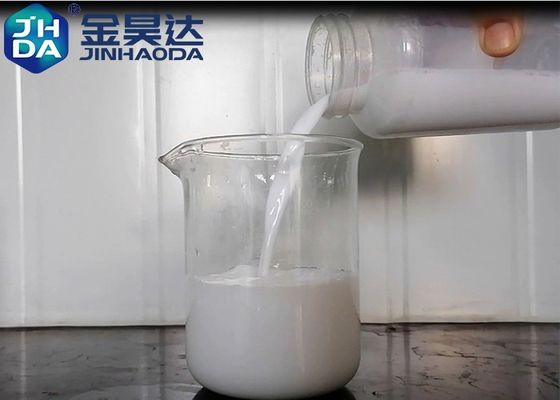
The cationic type is characterized by a white emulsion with ionic properties. It has a solid content of approximately 35%, with a tolerance of plus or minus 1%.
The pH value for this type ranges between 2 and 5, indicating its acidic nature. Additionally, the viscosity measured at 25ºC is less than 200 mPa.s, suggesting a relatively fluid consistency.
The anionic type also appears as a white emulsion with ionic characteristics. Similar to the cationic variant, its solid content is about 35%, with a margin of ±1%.
This type exhibits a pH range from 5 to 8, making it less acidic or nearly neutral. Its viscosity at 25ºC is below 100 mPa.s, indicating a more fluid state compared to the cationic type.
This product is highly versatile and finds extensive application in a variety of paper and cardboard materials. It is suitable for use in printing wrapping paper, writing paper, food wrapping paper, cable wrapping paper, and many other types. Typically, this product is added directly to the pulp during the manufacturing process.
In addition to being used on its own, it can also be combined with rosin glue and neutral sizing agents to enhance the sizing effect. This combination helps improve the quality and performance of the paper.
For optimal results when adding this product to the pulp, the recommended dosage is between 15 to 20 kilograms per metric ton of pulp. Similarly, aluminum sulfate should be added at a dosage of 15 to 20 kilograms per metric ton of pulp. Maintaining the pulp's pH value within the range of 4.5 to 5.0 is advisable to achieve the best performance.